
Texas Governor Greg Abbott has directed state agencies and public universities to suspend new H-1B visa petitions through May 2027, a move likely to affect Indian professionals. The order comes amid ongoing debate over skilled immigration and potential impacts on academic research and innovation.

'We have just scratched the surface because cricket has been around for the longest time.'

India's net revenues from the Goods and Services Tax (GST) rose at a three-month high pace of 10.7 per cent in August even as growth in gross collections slowed to 6.5 per cent from 7.5 per cent in the previous month, thanks to a nearly 20 per cent decline in refunds to taxpayers during the month.

'Netflix, Amazon Prime Video, Crunchyroll, and Disney+ Hotstar are continuously expanding their Anime libraries.'

Before resigning as an auditor of an Adani Group firm, Deloitte had sought an independent external examination of allegations made by a US short-seller but the company said the allegations had no effect on financial statements and the reasons cited for quitting were not convincing to warrant such a move. In a 163-page filing with stock exchanges relating to Deloitte Haskins & Sells LLP's resignation, Adani Ports and Special Economic Zone (APSEZ) said that in meetings with its leadership, Deloitte indicated concern over a lack of a wider audit role as auditors of other listed Adani companies. However, the firm conveyed to the auditor that it was not within its remit to recommend such appointments as other entities are "completely independent".

'Tax cases are technical in nature... Many high courts do not have a tax bench, which also contributes to the delay.'

'Employers increasingly want candidates who can take AI pilots from proof-of-concept to production-ready systems.' 'That requires governance, monitoring, and ROI measurement -- skills that go beyond coding and into business impact.'

Global business consultancy firm, Deloitte, plans to almost double its India workforce to 24,500 over the next 30 months, a top company official said.

A tech architect must have certifications across ERP platforms (SAP, Oracle, Microsoft) and Cloud platforms (MS, Google, Low code SAAS platforms such as Salesforce, and ServiceNow).

The proposed Central Bank Digital Currency (CBDC) to be issued by the Reserve Bank will play a critical role in improving the speed of transactions and reducing the cost of cash, a Deloitte report said on Wednesday. The Reserve Bank of India is planning to come out with a central bank-backed digital currency, using blockchain technology in 2022-23. As a financial services innovation, CBDCs are likely to play a pivotal role in shaping the 'future of value transfer', the report said, adding that most central banks worldwide are now in various stages of their evaluation of launching their national digital currencies.

Deloitte will assist Hyderabad Metro and the Andhra Pradesh government in preparation of bid documents, evaluation of bids, revision of the financial model, selection of concessionaire and negotiations with financial institutions for financial closure. The consultancy contract will be in force for one year.

The operator's liability in the case of an incident is limited to 3,000 crore for reactors with thermal power above 3,600 Megawatt; 1,500 crore for reactors with thermal power between 1,500 Mw and 3,600 Mw; 750 crore for reactors with thermal power between 750 Mw and 1,500 Mw; 300 crore for reactors with thermal power between 150 Mw and 750 Mw; and 100 crore for reactors having thermal power up to 150 Mw, fuel cycle facilities other than spent fuel reprocessing plants and transportation of nuclear materials.

Do not panic on receiving a notice. Verify if your work falls under professions notified in Section 44AA(1).

Auditor Deloitte flagged three transactions, including recoveries from a contractor identified in the Hindenburg report, as it issued a qualified opinion on the accounts of Adani Ports & Special Economic Zone.

Gross GST revenue rose 12.3 per cent to Rs 1.96 lakh crore in January on higher domestic economic activity, government data showed on Saturday. This includes 10.4 per cent growth in revenue from sale of goods and services domestically at Rs 1.47 lakh crore and 19.8 per cent rise in tax revenue from imported goods at Rs 48,382 crore.

After Chennai, it is Coimbatore, Madurai, and Tiruchirappalli, that are emerging as manufacturing hubs. Coimbatore is India's top Tier-II city in terms of the number of GCCs, according to a report by Cushman & Wakefield.

'Always keep accurate and transparent records of the source of the investment or property's funding: Loan agreements, transfer records of the property, and bank statements of co-owners if available.'

The automobile industry has sought government support in expediting approvals from the Chinese government for importing rare earth magnets used in various applications, including passenger cars. As per the industry sources, various domestic suppliers have already sought approval from the Chinese government through their local vendors in China.
Gross GST collections remained above the Rs 2 trillion mark for the second month in a row, rising 16.4 per cent in May to over Rs 2.01 lakh crore. Goods and Services Tax (GST) collection had touched a record high of Rs 2.37 lakh crore in April. In May, 2024, the mop up was Rs 1,72,739 crore.
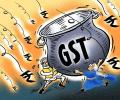
Gross GST collection grew 9 per cent to over Rs 1.87 lakh crore in October on higher revenues from domestic transactions. The Central GST collection stood at Rs 33,821 crore, State GST at Rs 41,864 crore, Integrated IGST at Rs 99,111 crore and cess at Rs 12,550 crore.

The rationalisation of goods and services tax (GST), announced on Wednesday, directly lowers the cost of everyday medical consumables, and also high-end therapies in oncology and rare diseases, helping reduce out-of-pocket patient expenditure and better adherence to medication.
Gross GST collection in March grew 9.9 per cent to over Rs 1.96 lakh crore, government data showed on Tuesday.

The main issues confronting CFOs currently, according to Deloitte, are the current economic slowdown, a depreciating rupee and inflation.

Audit firm Deloitte has resigned as auditors of Byju's citing a delay in submission of financial statements while almost simultaneously three of the edtech firm's board members have quit in what is being seen as a deepening crisis at the decacorn. Deloitte Haskins & Sells, which was slated to audit Byju's until 2025, stepped down with "immediate effect" mid-term stating that "the financial statements of the company are long delayed. In a letter sent to the board of Think & Learn Pvt Ltd (known as Byju's), Deloitte said it has not been able to start an audit due to the delays and that will have a "significant impact" on its ability to "plan, design perform and complete" the audit as per standards.

The Big Four accounting firms have increased the hiring of people from technology backgrounds in India amid an increased focus of clients on digital transformation, especially after the Covid-19 pandemic. EY India said that it has expanded its overall tech talent pool by 3x in the last three years across service lines including consulting, tax, assurance, and strategy & transactions. "Today over 50 per cent of our workforce is from STEM (science, technology, engineering and mathematics) and technology background," it said, adding that it continues to hire significantly in the areas of AI, cloud computing, data analytics and cybersecurity to help its clients in transformation.
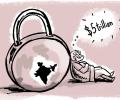
Foreign Direct Investment (FDI) is critically important for India to become a $5 trillion economy, Deloitte CEO Punit Renjen said while noting that over two-fifths of the 1,200 business leaders surveyed in the US, UK, Japan and Singapore are planning additional or first-time investments in India. Referring to the survey, he said India continues to be "one of the most attractive" FDI destinations. "Despite the COVID-19 destruction, inflows hit a record high last year. "Business leaders, whom Deloitte surveyed, are preparing to make additional and first-time investments in India," Renjen said.

Companies may foot less of the tax bill for some time yet. The corporate share of net direct tax collections has been lower in 2024-25 than in previous years. The corporate segment accounted for 45.6 per cent of total net direct tax collections as of March 16, compared to 48.1 per cent on the same date in 2023-24 (FY24).
Goods and Services Tax (GST) collection rose 12.6 per cent Y-o-Y to an all-time high of about Rs 2.37 lakh crore in April, which the government said shows resilience of the Indian economy and the effectiveness of cooperative federalism. The gross GST mop-up was Rs 2.10 lakh crore in April 2024 -- the second highest collection ever since GST was rolled out on July 1, 2017. The net mop-up was Rs 1.92 lakh crore.

India remains an attractive investment destination even as taxation uncertainties pose a challenge, according to global consultancy Deloitte.

JSW Paints, part of $23 billion JSW Group, on Friday said it will acquire majority controlling stake in Akzo Nobel India Ltd (ANIL), the maker of Dulux paints, for Rs 8,986 crore. It will acquire 74.76 per cent stake from its Dutch promoters/holding entities -- namely Imperial Chemical Industries and Akzo Nobel Coatings International BV -- for a consideration of Rs 8,986 crore, according to a statement from the JSW Group firm.

'The new Bill introduces no policy or rate changes, leaving financial planning strategies largely unaffected.'
'The considerations for choosing between the old and new tax regimes remain essentially unchanged.'

Foreign direct investment (FDI) inflows into India have crossed the $1 trillion milestone in the April 2000-September 2024 period, firmly establishing the country's reputation as a safe and key investment destination globally. According to data from the Department for Promotion of Industry and Internal Trade (DPIIT), the cumulative amount of FDI, including equity, reinvested earnings and other capital, stood at $1,033.40 billion during the said period.


Nasscom on Monday said the US clarification that the H-1B visa fee hike will not affect current visa holders and will apply as a one-time fee only to fresh petitions has helped address the immediate ambiguity surrounding eligibility and timelines.

Emerging economies such as India are seeing high attrition rates, which are estimated to be in double digits.

Gross GST collections grew 8.5 per cent to over Rs 1.82 lakh crore in November on account of increased sales spurred by the festive season.

Errors in filing income-tax returns frequently lead to scrutiny notices, additional liabilities, or delayed refunds.

He is the first Indian-origin person to head a 'Big-Four' audit co.
Gross GST collections rose by 9.1 per cent to about Rs 1.84 lakh crore in February, boosted by domestic consumption and indicating potential economic revival. As per the official data released on Saturday, on a gross basis, mop up from Central GST stood at Rs 35,204 crore, State GST at Rs 43,704 crore, Integrated GST at Rs 90,870 crore and compensation cess of Rs 13,868 crore.

Many travellers are now opting for domestic destinations like Goa, Kerala, Rajasthan, Lakshadweep, Himachal Pradesh, and the North East.
